

Young Immigration Couple

Spouse Green Card: Non U.S. Citizen Petitioner

Green Card holders (permanent residents) may petition for their Spouse (husband or wife).

First let’s look at the rules for the spouse of U.S. citizens. They are pretty straight forward.

Petitioner is a U.S. Citizen

A U.S. citizen (petitioner) files the I-130 petition and the spouse (beneficiary) can can file the I-485 at the same time. In other words the U.S citizen files the petition to prove that their alien relative is in a real marriage and the beneficary, the foreign national, applies for adjustment of status at the same time. They want to adjust their status from whatever non-immigrant visa they entered on into that of Lawful Permanment Resident.

Petitioner Is A Green Card Holder (Non U.S. Citizen)

Now, when the petitioner is only a green card holder things are more complicated because there is a backlog right now. Congress has limited the number of visas for the spouses and under-aged children of Lawful Permanment Residents. So in this situation under current processing times and guidelines you have to file the I-130 petition first.  The beneficiary is given a priority date when the I-130 petition is filed. This is the receipt date. The priority date is the beneficiary’s place in line. The beneficiary then must wait for that date to become current. Each month they have to check the visa bulletin to see when that priority date is going to become current. Once it becomes current then they can apply for the I-485 Adjustment of Status. This is called a “2 Step” process.

1 Step vs 2 Step Process

When a U.S. citizen files this is called a “1 Step” process because it is all done in one step. However, when the petitioner is a Green Card holder it is called a “2 Step” because it takes two steps. First the petitioner files the I-130 and the beneficiary is provided with a priority date. Once the priority date is current the beneficiary can file for Adjustment of Status.

Now given the fact that right now we are looking at 4 years plus for the processing of the spouses and under-aged children of Green Card holders to get a final decision it is most likely that the prority date will not become current until after the petitioner, the Green Card holder’s spouse, becomes a U.S. citizen and then upgrades their case. Now the petitioner is a U.S. Citizen and the USCIS is going to go ahead and process their petition and hopefully approve it and the beneficiary, the children or the spouse, can apply for the I-485 Adjustment of Status and get their Green Card. So it is a little bit trickier when the petitioner is only a Green Card holder.

Spouse Green Card Questions?

Questions about the spouse green card immigration process? Looking for help to make sure your petition or application can be processed as quickly as possible? Please contact immigration attorney Jessie M. Thomas. Call (214) 838-0045, Text (214) 838-0045 or Email contactus@staylegally.com today.

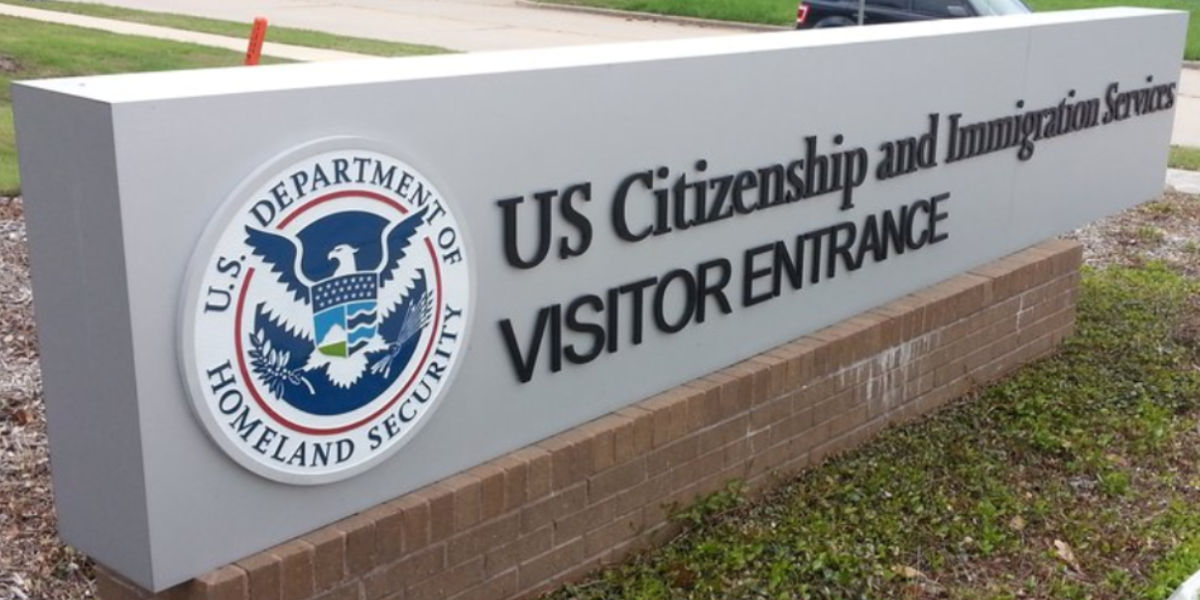
USCIS Dallas Field Office

Why Is My Immigration Case Taking So Long?

Why Hasn’t My Immigration Case Been Decided Yet?

Why Is My Immigration Case Taking So Long. Nationwide, you and millions of families, businesses, and
individuals applying for immigration benefits are waiting longer for U.S. Citizenship and Immigration Services (USCIS) to process and approve applications and petitions.

Based on previously available USCIS data, in Fiscal Year (FY)2017, an average case took about 6.4 months to process. In FY2022, an average case took more than twelve months. Those extra months of waiting halt business operations, keep families separated, and jeopardize lives.

Where Can I Find The Processing Time For My Immigration Case?

USCIS processing times are available on its website: https://egov.uscis.gov/processing-times/. To find your case’s processing time, you must select the form type, category, and field office or processing center from the drop-down menus. You will then see the processing time it takes for approximately 80% of that case type. Below that, there is a space to add the receipt date for your case and find out when you may make an inquiry in your case.

Who Is Affected by the Long Processing Times?

Anyone who files applications or petitions with USCIS is affected. You and other people applying for family-based benefits, employment-based benefits, naturalization, travel documents, and employment authorization are all experiencing delays.

Processing times for common form types show just how dire the situation is:

From FY2017 to FY2023

  • Processing times for all I-539 applications to change or extend status rose from about 2.8 months to 6.2 months.
  • Processing times for family-based adjustment of status (I485) applications rose from 7.8 months to 12.5 months.
  • Processing times for employment authorization (Form I-765) applications based on an adjustment of status application rose from 2.6 months to 5.5 months.

Note: there were slight decreases in processing times from FY2021 to FY2023.

Why Are Cases Taking Longer?

Many factors can slow down your case, including inefficient processing and understaffing. During the last administration, USCIS implemented many new policies designed to restrict legal immigration and delay processing. While the current administration has made some helpful changes, the COVID-19 pandemic has contributed to continued slowdowns.

What Steps Is the Government Taking Now to Speed Processing Times?

In March 2022, USCIS set new processing time goals and has committed to hiring more adjudicators and improving technology. They have also begun re-using previously captured fingerprints when possible. However, it will take time for the agency to catch up with the tremendous backlog.

What Can You Do?

Make sure your lawyer has your current contact information.

Work with your lawyer to file applications and petitions as early as allowed under the law, especially for cases where premium processing is not available. Many application renewals may be submitted up to 180 days prior to expiration.

Expect USCIS processing to take longer than desired, no matter what type of application you are filing. Your lawyer can guide you and help plan for delays. Sometimes, the only option is to await government action. In other cases, some tactics to address delays could include:

  • File a petition or application to safeguard your status in the U.S.
  • Ask USCIS to expedite your case if you qualify or if applicable, to premium process your case;
  • Talk to your congressman’s office for assistance; or
  • File a lawsuit to force USCIS to act on your case.

Immigration Processing Time Questions

Questions about your family-based immigration process times? Looking for help to make sure your petition or application can be be processed as quickly as possible? Please contact immigration attorney Jessie M. Thomas. Call (214) 838-0045, Text (214) 838-0045 or Email contactus@staylegally.com today.

Public Charge Rule

The new public charge rule went into effect on December 23, 2022. Consequently, the Department of Homeland Security (DHS) began using the new public charge inadmissibility test published in a final rule in September. The new rule will apply to applications postmarked or electronically submitted on or after December 23, 2022. This rule restores the historical meaning of the term ‘public charge.’ The historical definition had been in effect for decades before the Trump Administration’s restrictive revision of that term in 2019.

The new public charge rule is essentially the same as the 1999 Interim Field Guidance on the public charge ground of inadmissibility. Furthermore, the new rule returns the analysis of public charge inadmissibility to what was in place before 2019. As a result, in the new rule a noncitizen is deemed likely to become a public charge if DHS determines that they are likely to become dependent on the government for subsistence based on a “totality of circumstances” analysis of the following factors:

  • The noncitizen’s age; health; family status; assets, resources and financial status; and education and skills, as required by the INA;
  • The filing of Form-I-864, Affidavit of Support under Section 213 A of the INA, submitted on a noncitizen’s behalf when one is required; and
  • The noncitizen’s prior or current receipt of Supplemental Security Income (SSI); cash assistance for income maintenance under Temporary Assistance for Needy Families (TANF); State, Tribal, territorial, or local cash benefit programs for income maintenance (often called General Assistance); or long-term institutionalization at government expense.

What Benefits Are Not Considered in the Public Charge Analysis

In general, if a program typically does not provide the primary source of income, or it is made available without income-based eligibility rules, USCIS will not consider those programs in making a public charge determination.

  • Benefits received by family members other than the applicant
  • Receipt of certain non-cash beneftis such as Supplemental Nutrition Assistance Program (SNAP) or other nutrition assistance programs; Children’s Health Insurance Program (CHIP);Medicaid (other than for long-term institutionalization); housing benefits; any immunization benefits; disease-testing benefits; or other supplemental or special-purpose benefits
  • Specific purpose payments, such as payments for childcare, energy assistance, disaster relief, pandemic assistance, or for other specific purposes

Who Is a Public Charge?

Under the Immigration & Nationality Act (INA) Sections 212(a)(4) and 237(a)(5), a public charge is a noncitizen “who has become or is likely to become primarily dependent on the federal government for subsistence as demonstrated by either:
  • the receipt of public cash assistance for income maintenance; or
  • institutionalization for long-term care at government expense.

Am I Exempt from the Public Charge Analysis?

The new rule provides a list of those who are exempt from the public charge ground of inadmissibility; such as refugees, asylees and other statutorily or regulationly exempt humanitarian categories, as well as the limited options for requesting a waiver of a public charge determination.

What does it mean for you?

Applicants are not required to submit Form I-944 or DS-5540 when applying for permanent residency or a visa. However, a public charge portion and several additional questions were added to Form I-485 (Application for Adjustment of Status). Any green card applicants applying for a green card from within the United States on or after December 23, 2022 must use the new version of the form.

Public Charge Ground of Inadmissibility Questions?

Need to determine if you may be subject to the public charge ground of inadmissibility rule? Please contact immigration attorney Jessie M. Thomas. Call (214) 838-0045, Text (214) 838-0045 or Email contactus@staylegally.com today.
1 2 3 4 5 6 13